From Two Weeks to One Day: How Università della Svizzera italiana Streamlined Course Evaluation Reporting
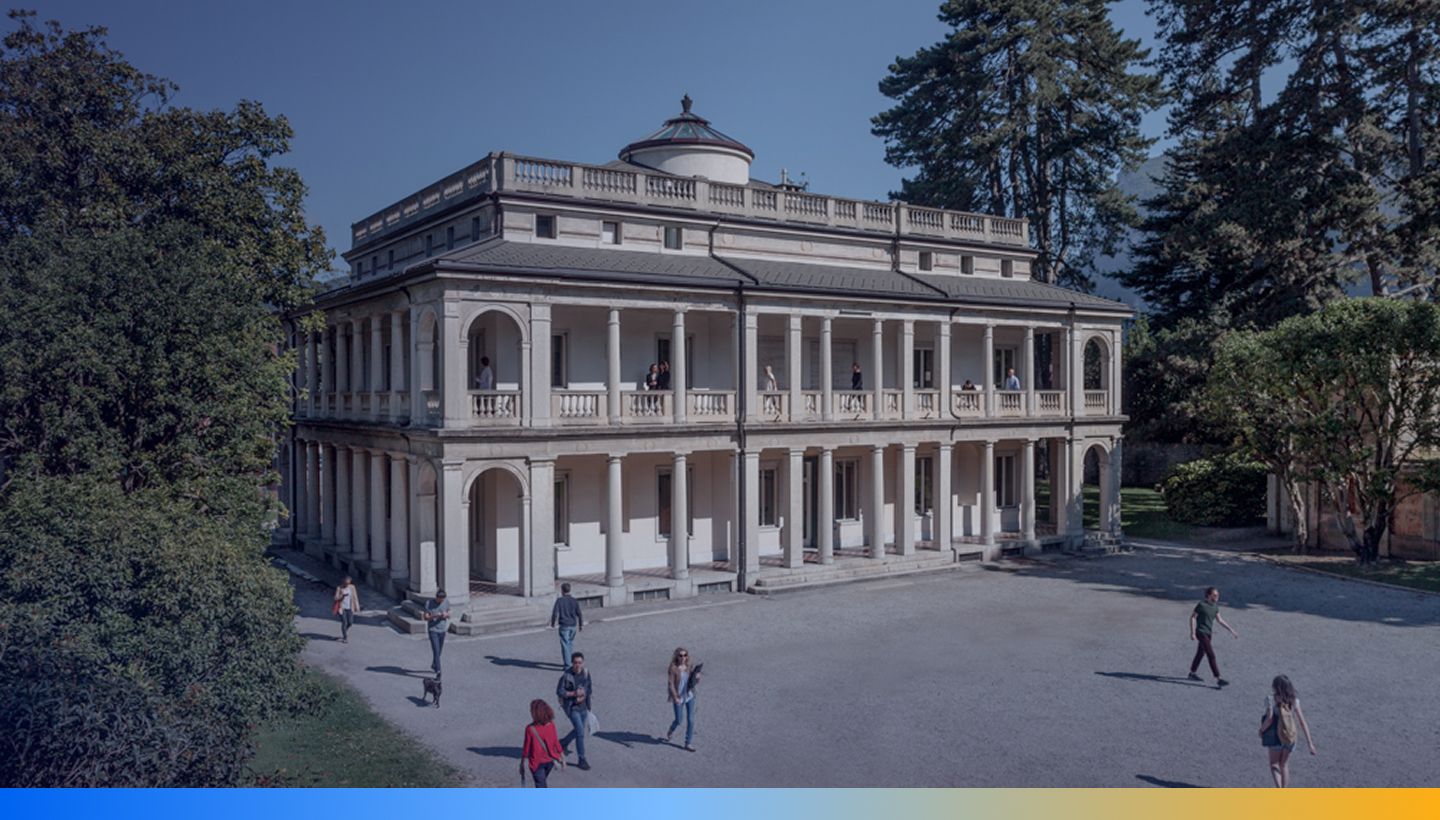

About Università della Svizzera italiana
Università della Svizzera italiana (USI) is one of 12 certified public universities in Switzerland. Established in 1996, it has six faculties and is active in several study and research areas including architecture, communication sciences, computational science, data science, economics, health studies, humanities, informatics, law, medicine and biomedicine. USI has campuses in Lugano, Mendrisio and Bellinzona.
The Challenge: Moving Beyond Manual Course Evaluations
Since its formation, USI’s approach to capturing feedback from its nearly 4,000-strong student community through course evaluation surveys has evolved significantly. Originally relying on paper surveys until 2008, the University then moved to an internally developed online system, but this continued to create a substantial administrative burden.
Michele Balmelli, who is responsible for the Quality Assurance Service, recalled the challenges USI faced: “When I joined the University in 2006 we were still using paper surveys and the workload was too high. I had to visit every class during lessons and in that time there were literally tons of paper forms. As a result, there were tons of documents which I had to digitalise, build reports for each course in Excel spreadsheets, and manually email each instructor with these. This was not a lasting solution.”
USI subsequently developed its own online system, but this did not solve all the problems. “Even when we switched to our own online system, a single form hosted on our website, issues remained,” Michele explained. “In the end, whilst we had very high participation rates, results were coming in after the end of the semester and after the exams, which was too late. Even in a small university like ours, it still took me at least two weeks to manually report – again, writing to each instructor – and this was not at all satisfactory for teaching colleagues.”
The Solution: Automation and Powerful Reporting Through Explorance Blue
An opportunistic approach by Explorance in late 2018 changed the direction of travel for USI.
“We spoke about a more professional solution and, after being assured that Explorance Blue was 100% compatible with our LMS, Moodle, I was invited to trial it for two months and that convinced me that this could be our solution,” Michele said.
“It was, and still is, a very straightforward system to use (no big IT knowledge is necessary) and with only 1.5 people in the University responsible for course evaluations this is important. With excellent training, and a kind and available professional support service, I can run now Blue myself. The basic report is built just once, which is forever repeatable, and it is so easy to manage. The system also allows me to check how many students have responded to the feedback surveys, and from there I can target specific students to fill out the form if needed.”
Eight years on, Blue has significantly reduced the administrative burden associated with course evaluations, bringing a number of practical benefits.
“Well, the automation, of course – that was Explorance’s offer to us, and it has completely lived up to what they said,” Michele revealed. “Just one person or a small team can manage it automatically. Above all, the reporting system, with everything archived and saved for every user and stakeholder who needs to see it, is very useful. The online representation and visualisation of the data is the main thing we like about the reporting, but essentially the reporting is done in a day. This is a significant improvement on the two weeks of manual reporting required under the previous system.”
The system has also made the process straightforward and repeatable. Rather than rebuilding evaluation projects each time, USI can copy an existing project, update the data and run it again. “Apart from that, I have the feeling – although I do not have the data to prove it – that for the users, it doesn’t change too much, and that has been extremely important,” he added.
In 2025-26 alone, around 4,000 students were surveyed in each of the two semesters, spanning 39 programmes and three campuses.
Blue has also continued to evolve since USI first implemented it. Michele sees particular potential in the Blue dashboard, which would allow instructors to view their performance over a longer historical period. The University is now considering expanding its approach to programme evaluations and has purchased Explorance MLY to support the analysis of qualitative feedback.
“Our Learning Lab is very happy to have this kind of machine learning, because they want to read a lot of different comments which are not necessarily the comments that come from the course evaluations, but also other things,” Michele shared. “I did the very first testing of MLY, years ago, with our data. I know that MLY has a long history of testing, and I know that it is more performant than other machine learning.”
The Outcome: Reducing Administration and Making Feedback More Actionable
For USI, the biggest impact of Explorance Blue has been the transformation of course evaluation from a heavily manual process into an efficient, automated and repeatable one.
“Today I have a fully supported course evaluation system based on our original model which has cut administration and workload,” Michele said. “For the students, because it is integrated with Moodle, we can reach them via three different access platforms with requests to complete the feedback. We have also been able to build questionnaires in English and Italian and this is useful for both students and instructors. Certainly, the quality of responses we have received from students has improved since moving to Blue.”
The contrast with the University’s original paper-based approach is considerable. Instead of handling “tons of paper forms”, manually digitising responses and producing individual Excel reports, a small team can now manage the process, with reporting completed in a day. The benefits extend to colleagues across the University.
“The best part of Blue is the powerful automated reporting,” Michele commented. “This is proving incredibly valuable and we are seeing course/programme modifications as a result of these evaluations. Staff who are interested in course evaluation are very happy because they can use the reports to examine results, compare them with previous years and identify areas for improvement. Programme Directors, Deans and Pro-Rectors are also using reports as part of a wider annual 360-degree feedback process. It is already a very good structure, but Explorance always proactively suggests improvements.”
The next stage for USI is to make better use of the data it already collects: tracking results over time, providing instructors with more accessible historical information, and using MLY to analyse qualitative feedback.
Meanwhile, USI benefits from being part of a wider community of Explorance users. Michele has participated in in-person events in Switzerland and engaged with colleagues at universities in Switzerland and the UK to share practical examples and best practice.
“We really appreciate the opportunity to learn from institutions using the platform in different ways, while recognising that national systems and terminology differ,” he said. “The way Explorance’s webinars are organised is fantastic as you see examples of others using Blue and MLY and how they successfully address common problems. I also get a lot of good advice from other Explorance customers and they are always ready to help when needed.”
After eight years using Blue, Michele is positive about USI’s decision to adopt the platform: “We are really happy with the tool in general and I can assure that Explorance’s original promise was good. Overall, we are getting higher quality responses for end-of-semester course evaluation surveys because this gives us the insight to make meaningful decisions. I would definitely recommend, and have suggested Blue, to universities in Italy and Switzerland. I am not there to sell, but have been on many calls describing our journey, and shown others this super system.”
Related Case Studies





Learn more about Explorance's products, solutions, and the company.

'%3e%3cpath%20d='M5.83968%2010.4004L7.09855%2015.7752L1.29959%2021.5843L1.23852%2021.642C1.21137%2021.6692%201.18762%2021.6997%201.16047%2021.7235C0.481112%2022.4372%200.0747675%2023.3674%200.0127211%2024.3508C-0.0493254%2025.3343%200.236888%2026.3082%200.821155%2027.1016C0.885626%2027.1865%200.950095%2027.2713%201.01796%2027.3493C1.0306%2027.3649%201.0442%2027.3796%201.05868%2027.3935C1.16422%2027.5192%201.27755%2027.6382%201.398%2027.7497L1.4455%2027.7939L1.67624%2028.0246L9.14125%2035.4896L20.0334%2024.6043L5.83968%2010.4004Z'%20fill='white'/%3e%3cpath%20d='M13.1078%2039.4493L9.78247%2042.761L15.1539%2041.5055L20.98%2047.3113L21.0411%2047.369L21.1225%2047.4504C21.8375%2048.1288%2022.7681%2048.5345%2023.7517%2048.5965C24.7354%2048.6585%2025.7096%2048.373%2026.5041%2047.7897C26.5889%2047.7253%2026.6737%2047.6608%2026.7518%2047.5929L26.7959%2047.5522C26.9233%2047.4401%2027.0434%2047.3199%2027.1556%2047.1925C27.1709%2047.1795%2027.1845%2047.1647%2027.1963%2047.1484L27.4304%2046.9211L34.8954%2039.4561L23.9999%2028.5605L13.1078%2039.4493Z'%20fill='white'/%3e%3cpath%20d='M34.8921%209.76194L38.2072%206.45019L32.8358%207.70228L27.0199%201.89315L26.9588%201.83207C26.9317%201.80492%2026.9045%201.78117%2026.8808%201.75403C26.1658%201.07561%2025.2352%200.669967%2024.2515%200.607946C23.2679%200.545924%2022.2937%200.831473%2021.4992%201.41471L21.2515%201.61491L21.204%201.65902C21.0833%201.7643%2020.9699%201.87767%2020.8646%201.99833L20.8239%202.04245L20.5932%202.2664L13.1282%209.73141L23.9999%2020.6473L34.8921%209.76194Z'%20fill='white'/%3e%3cpath%20d='M47.1789%2022.1067C47.1181%2022.0204%2047.0524%2021.9377%2046.9821%2021.859L46.9414%2021.8149C46.8301%2021.6867%2046.7099%2021.5665%2046.5817%2021.4552L46.5376%2021.4145L46.3069%2021.1838L38.8419%2013.7188L27.9531%2024.6041L38.8419%2035.4928L42.157%2038.8046L40.9015%2033.4332L46.7073%2027.624L46.7683%2027.5663L46.8464%2027.4815C47.5267%2026.769%2047.9337%2025.8392%2047.9958%2024.856C48.0579%2023.8727%2047.771%2022.8992%2047.1857%2022.1067H47.1789Z'%20fill='%230050C1'/%3e%3c/g%3e%3cdefs%3e%3cclipPath%20id='clip0_6641_12689'%3e%3crect%20width='48'%20height='47.9966'%20fill='white'%20transform='translate(0%200.603516)'/%3e%3c/clipPath%3e%3c/defs%3e%3c/svg%3e)