Explorance MLY: Turn Qualitative Feedback into Insights with Machine Learning
Explorance MLY (mi-lee) uses purpose-built technology to help organizations and their leaders better understand student or employee needs and expectations. By turning those feedback data points into powerful insights, MLY helps realize everyone’s potential.
Next-Gen Technology You Can Trust

Alerts Highlighted

Comment Insights Generated

Recommendations Provided
Organizations Worldwide Trust Explorance


What is Explorance MLY?
Explorance MLY is the leading solution for turning qualitative feedback into actionable insights. With specific machine learning models built for Higher Education and Enterprise, MLY provides sentiment analysis, crowdsourced recommendations, and alerts on sensitive matters with unparalleled speed and accuracy.


 October 21 - November 18, 2026
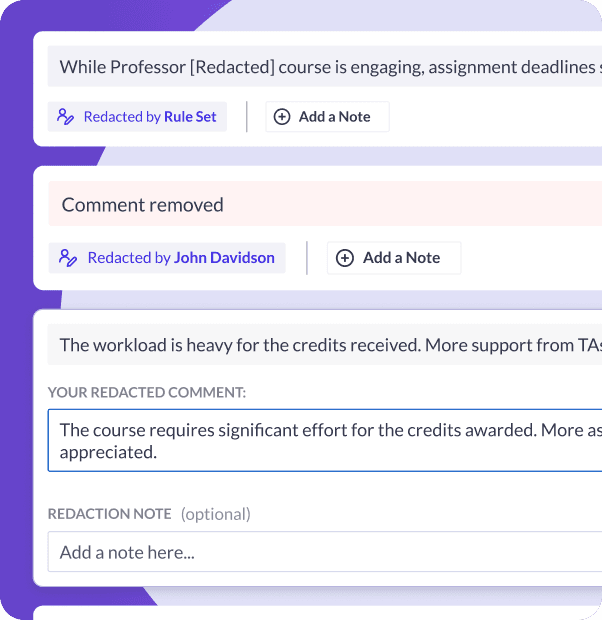
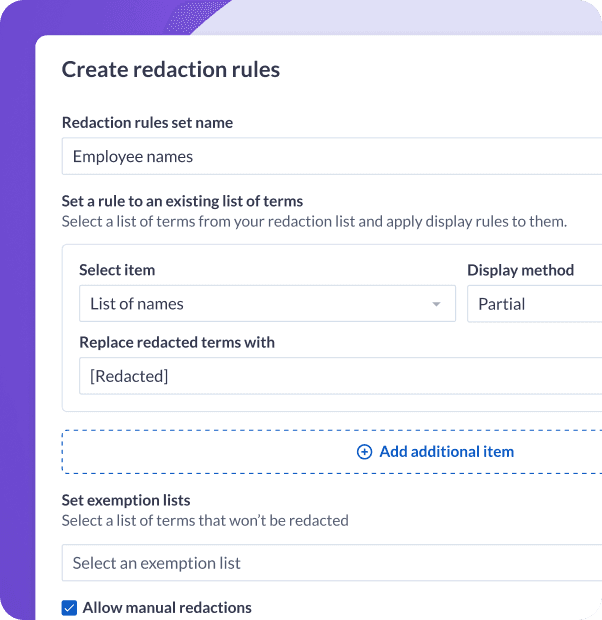
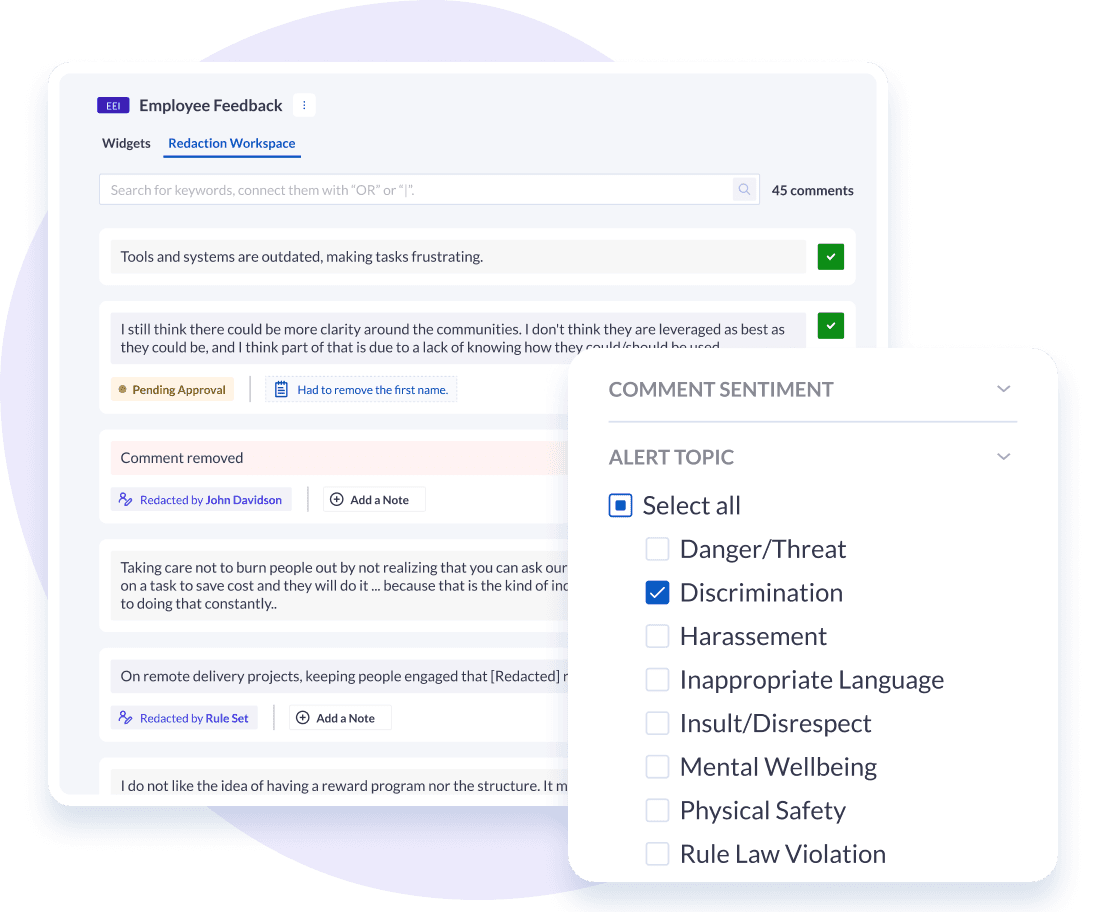
Safeguard Feedback Data with Redaction
MLY Redaction protects sensitive data while preserving meaningful insights, giving organizations a compliant foundation for collecting honest feedback. MLY automatically removes personal identifiers, ensuring your team can act on valuable insights while maintaining the trust and security your people deserve.



Machine Learning That Fuels Confident Decision-making
Each MLY machine learning model analyzes feedback within its practice, providing insights based on hundreds of built-in topics related to the student or employee experience. Organizations can act on that knowledge to drive meaningful improvement.



Foster an Institutional and Workplace Culture of Safety and Well-being
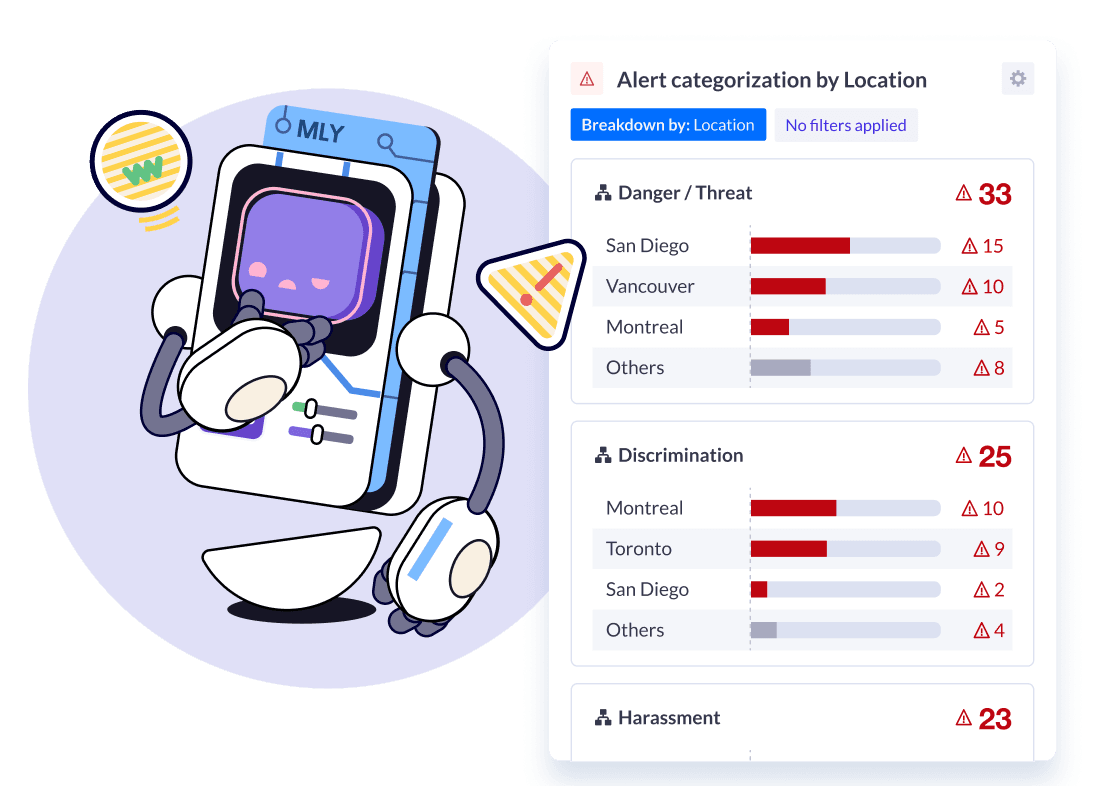
Identify, prioritize, and act on critical issues before they escalate. Flag and respond to pressing concerns such as discrimination, harm, and inappropriate behavior by automatically redacting sensitive information to promote a positive, secure environment.


Spend Less Time Analyzing Results, More Time Acting on Them
Upload up to a million comments with ease and have them analyzed in minutes. MLY’s machine learning is designed to handle large volumes of data to provide fast, scalable insights that enhance performance and experiences across growing organizations.


A More Responsible, Human Approach Than Generic AI
Explorance believes in a "human in the loop" approach to augmenting your feedback data with purpose-built machine learning. This commitment means MLY’s models offer transparency, accountability, and accuracy at every stage of the feedback process, plus the in-depth insights other out-of-the-box LLMs can’t replicate.


Why Organizations Worldwide Love MLY
'%3e%3cpath%20d='M38.6018%2017.0683H33.4083V14.6677C33.4083%209.91554%2035.6055%205.55531%2039.4008%202.61583C39.4507%202.61583%2039.4507%202.56683%2039.5007%202.51784V2.46885C40%202.02793%2040.0999%201.34205%2039.6505%200.803146C39.4008%200.509198%2038.9513%200.313232%2038.5518%200.362224C38.5019%200.362224%2038.452%200.313232%2038.402%200.313232C29.4133%201.29306%2022.3721%209.22966%2022.3721%2018.3421V32.9905C22.3721%2033.7253%2022.9713%2034.3132%2023.7204%2034.3132H38.6517C39.4008%2034.3132%2040%2033.7253%2040%2032.9905V18.3421C39.9501%2017.6562%2039.3508%2017.0683%2038.6018%2017.0683Z'%20fill='%23A777FE'/%3e%3cpath%20d='M16.2797%2017.0683H11.0362V14.6677C11.0362%209.91554%2013.2335%205.55531%2017.0287%202.61583C17.0787%202.61583%2017.0787%202.56683%2017.0787%202.51784C17.1119%202.51784%2017.1286%202.50151%2017.1286%202.46885C17.578%202.02793%2017.6779%201.34205%2017.2784%200.803146C16.9788%200.509198%2016.5793%200.313232%2016.1798%200.362224C16.1298%200.362224%2016.0799%200.313232%2016.03%200.313232C7.04619%201.29306%200%209.22966%200%2018.3421V32.9905C0%2033.7253%200.599251%2034.3132%201.34831%2034.3132H16.2797C17.0287%2034.3132%2017.628%2033.7253%2017.628%2032.9905V18.3421C17.578%2017.6562%2016.9788%2017.0683%2016.2797%2017.0683Z'%20fill='%23A777FE'/%3e%3c/g%3e%3cdefs%3e%3cclipPath%20id='clip0_2795_41031'%3e%3crect%20width='40'%20height='34'%20fill='white'%20transform='translate(0%200.313232)'/%3e%3c/clipPath%3e%3c/defs%3e%3c/svg%3e)


Discover Explorance MLY Success Stories



Explorance MLY FAQs
Any other questions?

Where is my data stored when I use MLY?
Uploaded comments are only retained for 2 weeks in the MLY back-end before deletion. This measure is taken for support and quality assurance purposes only. Comments are stored on Microsoft Azure infrastructure in the U.S.
Will my data be used to train MLY?
Your data is your data. Comments uploaded to MLY are not used for any purpose beyond the requested analysis. In addition, customer data is only used in training MLY if the customer has provided written consent.
How does MLY work?
MLY analyzes qualitative data and summarizes that data into quantitative feedback and insights such as sentiments, alerts, recommendations, and topics. Using Natural Language Processing (NLP), MLY can recognize hidden patterns and correlations in the data, cluster and classify them, and improve as it processes more data over time.
How is MLY trained?
Explorance uses a supervised machine learning approach to train MLY. This methodology ensures MLY is trained only on comments formally approved through an in-house blind annotation process. This process uses three annotators working independently, and a comment is approved only if all three unanimously agree on the interpretation.
How is MLY different from platforms like ChatGPT?
MLY’s primary strengths are its specialized categorization and actionable insights. Built to understand the student and employee experience, the analysis produces more targeted, relevant insights with themes and terminology specific to the topic. Additionally, MLY enables decisive action through its Recommendations and Alerts models, providing a starting point for the most critical themes in the data.
What are common feedback sources MLY can analyze?
MLY can analyze feedback sources such as engagement surveys, course evaluations, performance reviews, experience surveys, peer reviews, program evaluations, social media, review websites, discussion forums, and more.
How does MLY Alerts work?
During an analysis, each comment is given an alert score between 0 and 100. The system compares that score to the alert threshold and displays any scores at or above the threshold as an alert in the results. The default threshold is 50 but can be adjusted higher or lower to match your organization's policies, tolerance, or culture regarding which comments should be reviewed for potential follow-up.
Can MLY understand acronyms and abbreviations?
Multiple glossaries can be created to accommodate the use of specialized acronyms or abbreviations in different departments, faculties, locations, etc., and then applied to those comments.


Learn more about Explorance's products, solutions, and the company.

'%3e%3cpath%20d='M5.83968%2010.4004L7.09855%2015.7752L1.29959%2021.5843L1.23852%2021.642C1.21137%2021.6692%201.18762%2021.6997%201.16047%2021.7235C0.481112%2022.4372%200.0747675%2023.3674%200.0127211%2024.3508C-0.0493254%2025.3343%200.236888%2026.3082%200.821155%2027.1016C0.885626%2027.1865%200.950095%2027.2713%201.01796%2027.3493C1.0306%2027.3649%201.0442%2027.3796%201.05868%2027.3935C1.16422%2027.5192%201.27755%2027.6382%201.398%2027.7497L1.4455%2027.7939L1.67624%2028.0246L9.14125%2035.4896L20.0334%2024.6043L5.83968%2010.4004Z'%20fill='white'/%3e%3cpath%20d='M13.1078%2039.4493L9.78247%2042.761L15.1539%2041.5055L20.98%2047.3113L21.0411%2047.369L21.1225%2047.4504C21.8375%2048.1288%2022.7681%2048.5345%2023.7517%2048.5965C24.7354%2048.6585%2025.7096%2048.373%2026.5041%2047.7897C26.5889%2047.7253%2026.6737%2047.6608%2026.7518%2047.5929L26.7959%2047.5522C26.9233%2047.4401%2027.0434%2047.3199%2027.1556%2047.1925C27.1709%2047.1795%2027.1845%2047.1647%2027.1963%2047.1484L27.4304%2046.9211L34.8954%2039.4561L23.9999%2028.5605L13.1078%2039.4493Z'%20fill='white'/%3e%3cpath%20d='M34.8921%209.76194L38.2072%206.45019L32.8358%207.70228L27.0199%201.89315L26.9588%201.83207C26.9317%201.80492%2026.9045%201.78117%2026.8808%201.75403C26.1658%201.07561%2025.2352%200.669967%2024.2515%200.607946C23.2679%200.545924%2022.2937%200.831473%2021.4992%201.41471L21.2515%201.61491L21.204%201.65902C21.0833%201.7643%2020.9699%201.87767%2020.8646%201.99833L20.8239%202.04245L20.5932%202.2664L13.1282%209.73141L23.9999%2020.6473L34.8921%209.76194Z'%20fill='white'/%3e%3cpath%20d='M47.1789%2022.1067C47.1181%2022.0204%2047.0524%2021.9377%2046.9821%2021.859L46.9414%2021.8149C46.8301%2021.6867%2046.7099%2021.5665%2046.5817%2021.4552L46.5376%2021.4145L46.3069%2021.1838L38.8419%2013.7188L27.9531%2024.6041L38.8419%2035.4928L42.157%2038.8046L40.9015%2033.4332L46.7073%2027.624L46.7683%2027.5663L46.8464%2027.4815C47.5267%2026.769%2047.9337%2025.8392%2047.9958%2024.856C48.0579%2023.8727%2047.771%2022.8992%2047.1857%2022.1067H47.1789Z'%20fill='%230050C1'/%3e%3c/g%3e%3cdefs%3e%3cclipPath%20id='clip0_6641_12689'%3e%3crect%20width='48'%20height='47.9966'%20fill='white'%20transform='translate(0%200.603516)'/%3e%3c/clipPath%3e%3c/defs%3e%3c/svg%3e)